
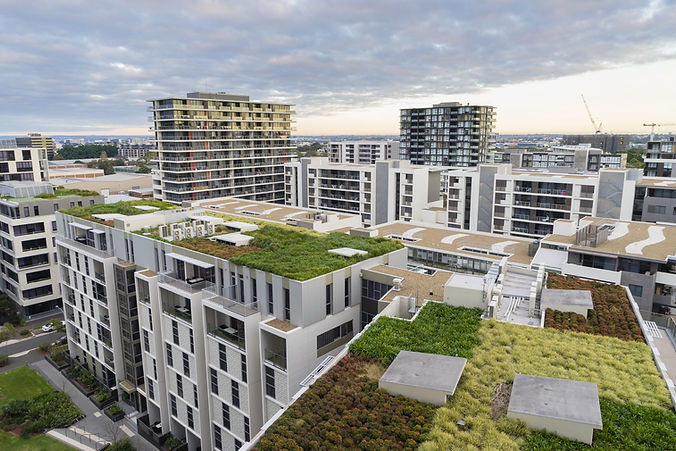
Carbon Neutral
As climate change continues to reshape global priorities, the architecture and construction industries are under mounting pressure to reduce their environmental impact. Buildings are responsible for nearly 40% of global carbon emissions, with significant contributions from both operational and embodied carbon. In response, achieving carbon neutrality—or net-zero carbon—in building design is no longer optional, but imperative.
What is a Carbon Neutral Building?
A carbon-neutral building is one that emits no net carbon dioxide over the course of its life cycle. This includes:
Operational carbon: Emissions from energy used for heating, cooling, lighting, and appliances.
Embodied carbon: Emissions from the production, transport, installation, and disposal of building materials.
A truly carbon-neutral building both minimizes carbon emissions through design and technology and offsets or removes the remaining emissions through renewable energy generation or carbon credits.
Design for Efficiency First
The path to carbon neutrality begins with reducing demand.
Passive Design Strategies
Orientation & Layout: Maximize natural daylight and ventilation by aligning the building with solar and wind paths.
Thermal Mass & Insulation: Use materials that regulate indoor temperatures by absorbing and releasing heat.
Building Envelope: Invest in airtight, well-insulated envelopes to minimize heat loss or gain.
Glazing Optimization: Use high-performance windows and strategic shading to reduce solar gain and heat loss.
Smart Space Planning
Compact Forms: Reduce surface area exposed to the elements.
Zoning: Separate thermal zones for better control and reduced energy consumption.
Our goal is to achieve a building with ultra-low energy requirements—ideally within Passive House or Net Zero Energy Building parameters.
Maximize On-site Renewable Energy
Producing renewable energy on-site significantly offsets a building’s operational carbon footprint.
Photovoltaic Panels (Solar PV): Install roof- or façade-mounted solar panels.
Solar Thermal Systems: Use for domestic hot water or space heating.
Small-Scale Wind Turbines: Where feasible, especially in rural or open areas.
Battery Storage: Pair with renewable systems to store excess energy and smooth demand.
Design Tip: Optimize roof design and orientation for maximum solar gain.
Specify Low-Carbon and Circular Materials
Low-Carbon Material Choices
Timber: Responsibly sourced wood sequesters carbon and is renewable.
Recycled Content: Choose steel, aluminum, and concrete with high recycled content.
Low-Carbon Concrete: Use supplementary cementitious materials like fly ash or slag.
Bio-based Insulation: Options like hempcrete, cellulose, or sheep’s wool.
Design for Circularity
Modular Construction: Enables easy disassembly and reuse.
Durability & Flexibility: Design buildings that last and adapt over time.
Material Passports: Track materials for future reuse and recycling.
Conduct A Whole Life Carbon Assessment (WLCA)
A Whole Life Carbon Assessment quantifies emissions over the building’s full lifecycle:
A1–A5: Material production and construction
B1–B7: Operational emissions
C1–C4: End-of-life processes
D: Reuse, recovery, recycling potential
Use tools like:
One Click LCA
Tally
Athena Impact Estimator
eToolLCD
WLCA informs smarter design decisions and helps benchmark progress toward carbon neutrality.
Optimize Operational Performance with Smart Systems
Once built, performance often diverges from design expectations. Use building technology to stay on track.
-
Building Management Systems (BMS): Monitor and automate energy use.
-
Sensors & IoT: Collect real-time data on temperature, occupancy, and air quality.
-
Commissioning & Post-Occupancy Evaluation: Verify that systems work as designed and occupants use them effectively.
Offset Residual Carbon Emissions
After reducing emissions as far as possible, offset the remainder through verified programs:
Renewable Energy Certificates (RECs)
Carbon Offset Projects (reforestation, clean cookstoves, methane capture)
Direct Air Capture (DAC) (emerging but costly technology)
Caution: Offsets should be a last resort—not a substitute for real reductions.
Certify Your Building
Certification builds credibility and provides third-party verification of carbon-neutral performance.
Leading Frameworks:
LEED Zero Carbon
Passive House (PHI or PHIUS)
Living Building Challenge
Architecture 2030 Zero Code
BREEAM Net Zero Carbon
These standards promote rigorous performance and offer pathways to continual improvement.
Conclusion
Achieving carbon neutrality in buildings is not just an environmental necessity—it’s an architectural opportunity. It challenges us to rethink form, function, materials, and systems, and to design buildings that restore rather than deplete. The technologies and methods exist; what’s needed now is the collective commitment from architects, engineers, clients, and policymakers.
By following a holistic, integrated approach—from site planning and material selection to systems design and lifecycle analysis—carbon-neutral buildings can become the new standard, not the exception.